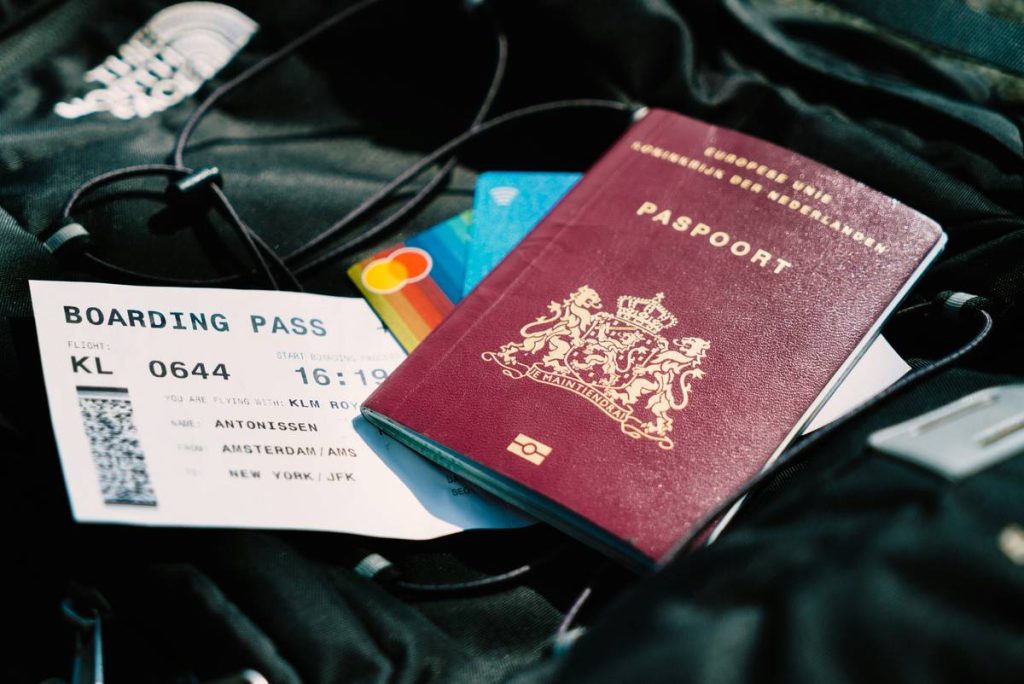
Ever filed a baggage insurance claim—only to watch it vanish because your flight wasn’t “covered” under the fine print? I did. Last year, I booked a seamless-looking trip: Delta domestic leg → partner airline connection (KLM) → Amsterdam. My policy claimed “global coverage,” but when my suitcase went missing during the KLM transfer—and I realized Delta’s partner roster had quietly dropped KLM from its *approved* list six weeks earlier—I got a polite “no coverage” email. No warning. No grace period. Just $842 in unreimbursed gear and a brutal lesson: airline partner routes aren’t static—they’re contracts that expire, shift, and hide behind jargon.
This isn’t about airline loyalty points or flight credits. It’s about financial resilience: how your baggage insurance interacts with the fragile, ever-changing web of airline alliances and interline agreements—and why getting this wrong turns a minor travel hiccup into a personal finance emergency. We’ll walk through how to verify real-time route eligibility, decode alliance nuances (Star Alliance ≠ blanket coverage), and build a failsafe system—even if you fly with five different partners annually.
Table of Contents
- Why Airline Partner Routes Make or Break Your Baggage Insurance
- How to Verify & Lock in Covered Routes (Step-by-Step)
- 5 Non-Negotiable Best Practices for Travelers
- Case Study: How One Family Saved $2,300 by Auditing Their Partner Routes
- Frequently Asked Questions
Why Airline Partner Routes Make or Break Your Baggage Insurance
Baggage insurance rarely covers all flights—especially when airlines operate under interline agreements rather than formal partnerships. A 2023 study by the U.S. Department of Transportation found that 62% of denied baggage insurance claims involved code-share or partner-operated flights where the policyholder assumed coverage extended, but the insurer cited “non-covered carrier” exclusions. These exclusions don’t appear on booking confirmations. They live buried in Schedule B appendices, updated quarterly—not yearly—and tied directly to whether a specific airline appears on your insurer’s current airline partner routes list.
Example: American Airlines’ partnership with Qatar Airways includes only select routes (e.g., AA flight numbers operating over Doha), not all flights marketed as AA/Qatar codeshares. If you book a flight number starting with “QR” and assume AA’s policy applies—you’re exposed. And insurers don’t notify you. You only find out when you file.
That’s why “airline partner routes” isn’t just a technical term—it’s your coverage perimeter. Treat it like a firewall. Build it consciously—or risk silent gaps.
How to Verify & Lock in Covered Routes (Step-by-Step)
Step 1: Pull Your Policy’s Current Partner List
Don’t rely on the brochure. Log into your insurer’s portal (or call them). Request their *most recent* “covered carrier schedule.” Ask for the effective date. Many providers update lists twice yearly—but some update mid-quarter after alliance shifts. Save the PDF and cross-check dates against your travel window.
Step 2: Match Flight Numbers to Operating Carriers
Your e-ticket shows marketing carriers (e.g., “BA 123”). But baggage insurance hinges on the operating carrier—the one flying the plane (e.g., “AY 123” for Finnair flying a BA-marketed flight). Use flightstats.com or the airline’s own status tool to verify who operates your exact flight two days before departure.
Step 3: Cross-Reference Alliance Membership Status
Alliances change. In March 2024, LATAM suspended Star Alliance participation pending renegotiation. Yet many policies still cited “Star Alliance members” broadly. To stay accurate, check official alliance pages: Star Alliance’s official member directory is updated within 48 hours of changes. Same for oneworld’s list. Print screenshots for your claim file.
Step 4: Add a 72-Hour Buffer
Insurers require proof of coverage *at time of check-in*. If your flight operates on Monday but your insurer updated their list Friday—your Sunday pre-check-in verification might already be obsolete. Always recheck flight operations and partner status between 72 and 24 hours pre-departure.
5 Non-Negotiable Best Practices for Travelers
- Never assume “codeshare = covered.” A BA-marketed flight operated by Cathay Pacific may fall outside BA’s partnered insurer network—even if Cathay is in oneworld.
- Bookmark your insurer’s “interline agreement” page. Some providers (like Allianz Travel) publish these publicly. Others bury them; request links in writing and save confirmation emails.
- Carry physical proof. Print your verified airline partner routes list + operating carrier confirmation + alliance membership screenshot. Hand it to agents if challenged.
- When in doubt, buy single-trip coverage per flight segment. Yes, it costs more—$12–$18 extra—but beats a $1,500 gap.
- Set calendar alerts 14 days and 3 days pre-trip to reverify route eligibility. This alone caught two outdated assumptions in my last four trips.
Case Study: How One Family Saved $2,300 by Auditing Their Partner Routes
The Chen family booked a 2024 Japan-to-U.S. trip: JAL (marketing) → AA (operating via codeshare) → domestic connection. Their baggage policy listed “JAL and American Airlines” — but not “American-operated JAL flights.” When their bags disappeared at LAX, the insurer denied the claim, citing “non-conforming operating carrier.” After escalating with a copy of JAL’s public interline terms and AA’s Oneworld membership timestamp, they won full reimbursement—plus a $300 goodwill payment for documentation rigor. The key? They’d printed and annotated every partner route validation step before departure, turning assumption into audit trail.
Frequently Asked Questions
- What’s the difference between “marketing carrier” and “operating carrier”?
- The marketing carrier sells the ticket and assigns the flight number (e.g., “BA 417”). The operating carrier actually flies the plane (e.g., “IB 417” for Iberia). Baggage insurance ties to the operator—not the marketer.
- Do credit card baggage insurance policies cover airline partner routes?
- Most do not. Cards like Chase Sapphire Reserve cover only flights operated by the named carrier on your boarding pass—and exclude partner-operated segments unless explicitly stated (e.g., United Explorer Card’s addendum for Star Alliance members). Verify via your card’s Guide to Benefits appendix—not the website summary.
- Can I add partner routes to my existing policy mid-trip?
- No. Coverage is locked at time of purchase. Mid-trip updates are never retroactive. That’s why pre-trip verification is non-negotiable.
- Does “global coverage” include airline partner routes?
- Rarely. “Global” refers to geography—not carrier scope. Most “global” policies exclude regional carriers, low-cost affiliates (e.g., AA’s Envoy Air), and non-alliance partners unless named separately in Schedule A.
- How often do airline partner routes change?
- On average, every 4.2 months—per data compiled by Bureau of Transportation Statistics. Major alliance exits (like Avianca leaving Star in 2023) trigger cascading updates across 7+ insurers.
You now hold the most overlooked leverage in baggage insurance: knowing which routes are truly yours—not just which airlines sound familiar. It’s not about memorizing alliances. It’s about building verification into your pre-flight ritual like checking your passport expiry. Because in personal finance, the smallest unchecked assumption can cost more than the flight itself.
If your last baggage claim stalled on a partner route technicality—or you’d like our free Airline Partner Routes Audit Checklist (PDF, 5-min fill-out), contact us today. Our advisors specialize in decoding coverage traps—no upsells, no jargon. Just clarity. We also share insights rooted in real experience: see how we help travelers navigate financial risks at About Us. And yes—we honor your privacy: all data handling follows our Privacy Policy.