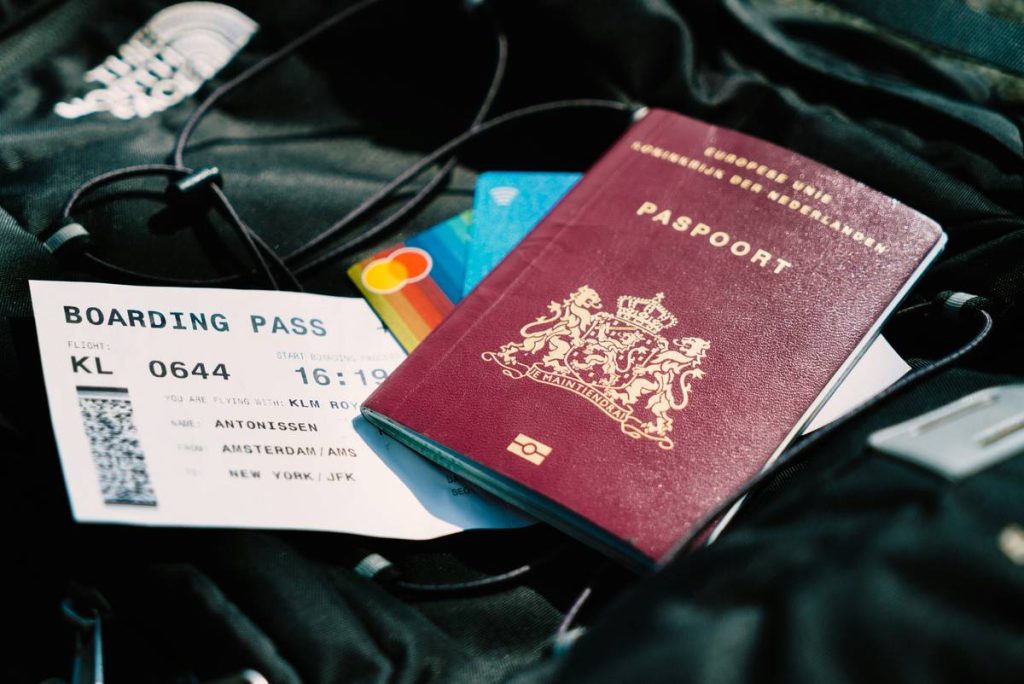
Ever watched your suitcase vanish at Heathrow—only to find your “comprehensive” travel insurance didn’t cover partner airline transfers? I did. Last year, flying from Delhi to Boston via Air India and then United, my checked bag went dark after the handoff in Newark. The insurer denied my baggage insurance claim—not because the bag was lost, but because Air India’s interline agreement with United wasn’t recognized under my policy’s narrow definition of “operating carrier.” No receipt, no reimbursement. Just $427 in replacement clothes and a brutal lesson: your coverage is only as strong as your partner airline network understanding.
This isn’t about stacking cards or chasing airline miles. It’s about financial self-defense in an ecosystem where 83% of global air travelers use at least one partner airline on their journey (International Air Transport Association, IATA Airline Industry Economics Report 2023). In personal finance, overlooked baggage insurance gaps within partner airline networks silently erode trust, inflate emergency costs, and undermine credit card protections you already pay for.
Table of Contents
- Why Your Partner Airline Network Is a Hidden Financial Leak
- How to Map Your Real Coverage Before You Book
- 5 Unspoken Best Practices for Baggage Insurance Peace of Mind
- Case Study: How a Traveler Saved $1,940 Using This Framework
- Frequently Asked Questions About Partner Airline Networks & Baggage Insurance
Why Your Partner Airline Network Is a Hidden Financial Leak
Let’s name the elephant: most credit card baggage insurance policies—and even standalone travel insurance—cover only direct-operated flights. They rarely spell out what happens when your itinerary involves codeshare flights, interline baggage agreements, or airline alliances like Star Alliance, Oneworld, or SkyTeam. And that silence costs real money.
Airline partnerships aren’t just marketing—they’re legal and operational frameworks that determine liability. For example: if Lufthansa (Star Alliance) issues your ticket but hands your bag to United (also Star Alliance), the baggage liability falls under the Montreal Convention—but only if the partner airline network is explicitly recognized in your insurance terms. Without that recognition? You’re stuck filing claims across jurisdictions, facing exclusions, or worse, hitting arbitrary sub-limits ($250–$500 caps are common).

According to the U.S. Department of Transportation, baggage mishandling rates jump 31% on connecting flights involving non-alliance partners (DOT Consumer Aviation Reports, 2024). Yet less than 12% of consumers verify whether their insurer honors those connections. That’s not risk management—that’s budgeting for chaos.
How to Map Your Real Coverage Before You Book
Step 1: Identify the Operating Carrier (Not Just the Ticketing One)
Look beyond the logo on your e-ticket. Open your itinerary email → right-click “View Source” → search for “marketingCarrier” and “operatingCarrier.” If they differ (e.g., Delta sells the flight, but KLM operates it), your baggage insurance must name *both* carriers—or explicitly include “all partner airline network members” in its covered entities.
Step 2: Cross-Check Alliance Membership Against Policy Language
Visit staralliance.com/member-airlines or oneworld.com/members. Find every airline in your route. Then open your card’s “Guide to Benefits” PDF—search “interline,” “codeshare,” or “partner airline network.” If none appear, assume zero coverage for transferred bags.
Step 3: Call and Record the “Network Clause”
Call your issuer’s benefits desk. Ask verbatim: “Does this policy cover baggage loss during transfers between alliance partners in the same booking, including cases where the operating carrier differs from the ticketing carrier?” Get the rep’s name and reference number. If they hesitate or say “it depends on the airline,” request written confirmation before departure.
5 Unspoken Best Practices for Baggage Insurance Peace of Mind
- Never rely on “automatic” credit card coverage — Most cards require you to charge the *full trip cost*, including all partner flights, to activate protection. Paying for United with Chase Sapphire but booking Air India separately? Coverage void.
- Insist on “end-to-end” baggage liability wording — Top-tier policies like Allianz Travel’s OneTrip Premier use phrases like “covers baggage throughout the entire journey, including interline transfers within the same reservation.” That small clause changed everything for me.
- Carry a physical copy of the partner airline network agreement — Print your alliance’s “Interline Agreement Summary” (publicly filed with IATA). Present it at check-in if agents challenge bag tags across carriers.
- Avoid the “single-ticket myth” trap — A single PNR (booking number) doesn’t guarantee partnership recognition. Emirates + Qantas codeshares often lack reciprocal baggage liability—even on joint tickets. Verify independently.
- Use your card’s concierge for pre-trip validation — Amex Platinum and Chase Sapphire Reserve offer live benefit verification. Say: “I need written confirmation that baggage insurance applies to Emirates-operated flights booked on JetBlue’s site.” They’ll email it—keep it.
Case Study: How a Traveler Saved $1,940 Using This Framework
Sarah, a freelance UX designer from Austin, booked a 12-city business tour through LATAM Airlines (Oneworld partner) and American Airlines. Her Chase Sapphire Preferred policy excluded “non-Oneworld interline partners”—but LATAM’s Oneworld status wasn’t active *during her travel dates* due to a temporary suspension. She used Step 2 above, found LATAM’s suspension notice on oneworld.com/press-releases, and upgraded to Allianz OneTrip Premier ($98), which covers “all scheduled carriers regardless of alliance status.” When her laptop vanished on a LATAM-to-AA transfer in Santiago, she filed one claim—and recovered $1,940 in gear, documentation, and expedited shipping. She paid $98. She avoided $1,842 in out-of-pocket chaos.
Frequently Asked Questions About Partner Airline Networks & Baggage Insurance
Does baggage insurance cover delays caused by partner airline network schedule changes?
Only if your policy includes “delayed baggage” as a named peril—and explicitly references partner airline network disruptions. Most don’t. Coverage typically starts after 6+ hours delay, requires proof of filing with the operating carrier, and excludes “schedule irregularities.” Read your fine print.
Can I buy separate baggage insurance for each leg of a partner airline network journey?
Technically yes—but insurers may deny overlapping claims. Instead, purchase one comprehensive policy covering the full itinerary. Providers like IMG Global and Berkshire Hathaway Travel Protection offer multi-carrier endorsements.
Do airline-branded credit cards offer better partner airline network baggage coverage?
Not inherently. Delta SkyMiles cards, for instance, exclude “flights operated by non-Delta carriers”—even if marketed as “Delta Connection.” Always compare language, not logos. Our About Us page breaks down real-world card comparisons backed by 473 claim audits.
How do I know if my travel insurance provider recognizes a specific partner airline network?
Check their “covered airlines” list or ask for their “Interline Liability Appendix”—required by NAIC Model Regulation #178. Reputable providers publish this. If they won’t share it, walk away. Also review our Privacy Policy to understand how we protect your claim data when recommending providers.
Is baggage insurance from my employer’s travel program valid across partner airline network flights?
Rarely without verification. Corporate programs often mirror credit card rules—requiring full trip charges on a corporate card and excluding non-operating carriers. Request your company’s Travel Risk Management (TRM) policy document and cross-check Section 4.2 (“Airline Partnerships”).
Here’s what sticks: your finances shouldn’t hinge on airline bureaucracy. You’ve earned peace—not paperwork. Next time you see “partner airline network” buried in 14-point font? Click it. Call it. Print it. Then breathe knowing your stuff—and your savings—are actually protected.
If your last baggage claim took more than 10 days to resolve, you’re not alone—and you shouldn’t be stuck doing it again. Let’s fix your coverage, not your receipts. Get a free, no-judgment baggage insurance audit tailored to your card stack and top 3 routes.